
blackjack live 2026 — live blackjack mobile

blackjack live – tendenser og udvikling i 2026

blackjack live er kendt for sine hurtige runder og klare regler, hvilket gør det tilgængeligt for alle. Men bag den simple facade gemmer der sig komplekse strategier. Her undersøger vi, hvordan live blackjack mobile kan hjælpe dig med at navigere i spillets mange facetter.

See also:

live blackjack mobile: Hvad du bør overveje

Push is a fundamental act of force application, one that permeates nearly every facet of human existence, from the most mundane physical interactions to the most abstract conceptual frameworks. At its most basic, a push involves the exertion of a force upon an object, typically in a direction away from the initiator, setting that object into motion or altering its trajectory if it is already moving. The physics of a push are governed by Newton’s laws, where the net force applied equals the mass of the object multiplied by its acceleration, and the reaction force is equal and opposite, meaning that the pusher also experiences a force, often felt as resistance or strain. In daily life, pushing manifests in countless ways: pushing a door open, pushing a shopping cart through a crowded aisle, pushing a stalled car to the side of the road, or pushing a child on a swing, each instance involving a nuanced interplay of muscle strength, body mechanics, and the target object’s properties such as mass, friction, and inertia. Beyond the physical, the concept of push extends metaphorically into social and psychological realms, where it signifies encouragement, persuasion, or coercion. A mentor pushes a protégé to achieve greater heights, a colleague pushes a project forward with relentless determination, or a crisis pushes an individual out of their comfort zone, forcing adaptation and growth. In technology, push refers to the delivery of information from a server to a client without an explicit request, as seen in push notifications on smartphones, which nudge users to engage with apps, check messages, or respond to alerts, thereby shaping attention and behavior in the digital age. The act of pushing also carries connotations of urgency and momentum, as in pushing a deadline, pushing a product to market, or pushing an agenda, implying a deliberate acceleration of processes that might otherwise stall. In sports, pushing is both a literal and strategic element: a sprinter pushes off the starting blocks, a basketball player pushes the ball up the court, a weightlifter pushes a barbell overhead, and a cyclist pushes against the pedals, each action requiring precise timing and force modulation. In construction and engineering, pushing is a controlled operation, such as pushing a tunnel-boring machine through rock, pushing piles into the ground to support foundations, or pushing a hydraulic press to shape metal, where the force is harnessed and directed with mechanical advantage. Even in nature, pushing is ubiquitous: tree roots push through soil, glaciers push debris before them, and tectonic plates push against each other, building mountains and causing earthquakes, illustrating the immense scale over which pushing operates. Philosophically, push can be seen as a counterpoint to pull, representing initiative, outward expression, and the desire to overcome resistance, whereas pull often signifies attraction, receptivity, and drawing toward oneself. This dichotomy appears in language, where we speak of push-pull factors in migration, push-pull marketing strategies, and push-pull dynamics in relationships, each highlighting the dual forces that drive change. In the realm of personal development, pushing oneself is a common theme, as individuals push through physical exhaustion during a marathon, push past mental barriers in learning a new skill, or push against societal expectations to forge a unique path, often discovering latent resilience and capability in the process. The ethics of pushing are complex; while pushing can be benevolent, as in pushing someone to seek medical help or to pursue a dream, it can also be intrusive or harmful, such as pushing someone into a decision they are not ready for or pushing an agenda that disregards others’ autonomy. Therefore, the context and consent surrounding a push are crucial, distinguishing between supportive nudges and undue pressure. In business, pushing is a sales technique, where a salesperson aggressively promotes a product, contrasting with pull marketing that attracts customers through brand appeal, and the balance between the two determines market success. In supply chains, push systems produce goods based on forecasted demand and push them to retailers, while pull systems respond to actual customer orders, each with trade-offs in efficiency and responsiveness. In software development, pushing code to a repository is a routine action, where developers push their local changes to a shared server, enabling collaboration, and the term also applies to pushing updates to users’ devices, ensuring they have the latest features and security patches. In medicine, pushing is a critical skill, as in pushing an intravenous catheter into a vein, pushing a patient’s wheelchair, or pushing a stretcher through hospital corridors, each requiring care and precision to avoid harm. In emergency situations, pushing can be lifesaving, such as pushing someone out of the path of a moving vehicle, pushing a drowning person to the surface, or pushing a defibrillator button to deliver a shock, where decisive, forceful action overrides hesitation. The sensation of push is also integral to our proprioceptive sense, informing us of contact and resistance, and it plays a role in balance and movement, as we push against the ground to walk, run, or jump. In art and creativity, pushing boundaries is a celebrated pursuit, where artists push the limits of their medium, pushing colors, forms, and ideas to new extremes, and in doing so, they push the audience to see the world differently. In social movements, pushing for change is a rallying cry, as activists push for legislation, push for equality, and push against systemic oppression, often facing formidable opposition, yet their persistence can shift public opinion and policy over time. In personal relationships, pushing can be a way to express care, as when a friend pushes you to confront a problem or a partner pushes you to be more communicative, but it can also be a source of conflict if the push is unwanted or excessive. The word ‘push’ itself has a tactile, kinetic quality, its short, explosive sound mimicking the action it describes, and it appears in numerous idioms and phrases: ‘push the envelope,’ ‘push one’s luck,’ ‘push the button,’ ‘push through,’ ‘push aside,’ and ‘push forward,’ each adding nuance to the core meaning. In the digital world, the push of a button can trigger a cascade of events, from sending a message to launching a rocket, and the user interface often relies on pushes, clicks, and swipes to navigate, making the act of pushing a primary mode of interaction with machines. In manufacturing, pushing is part of lean production, where work-in-progress is pushed from one station to the next, and the concept of push vs. pull is central to optimizing workflow, reducing waste, and improving throughput. In transportation, pushing is used in rail operations, where a locomotive pushes a train from behind, often in situations where visibility is better or gradients are steep, and in maritime contexts, tugboats push barges or larger vessels into position, demonstrating the versatility of pushing across different domains. In sports training, pushing a sled, pushing a weighted cart, or pushing against resistance bands are common exercises to build strength and power, and athletes often push their bodies to the brink of failure to stimulate adaptation. In the kitchen, pushing is involved in kneading dough, pressing garlic, or pushing ingredients through a sieve, and the tactile feedback of pushing is essential to achieving the right texture. In gardening, pushing a shovel into the soil, pushing a wheelbarrow, or pushing a lawnmower are routine tasks that connect us to the earth and require physical effort.

vejle casino poker — eksklusive pokerbonusser | vejle casino poker

Blackjack Billeder
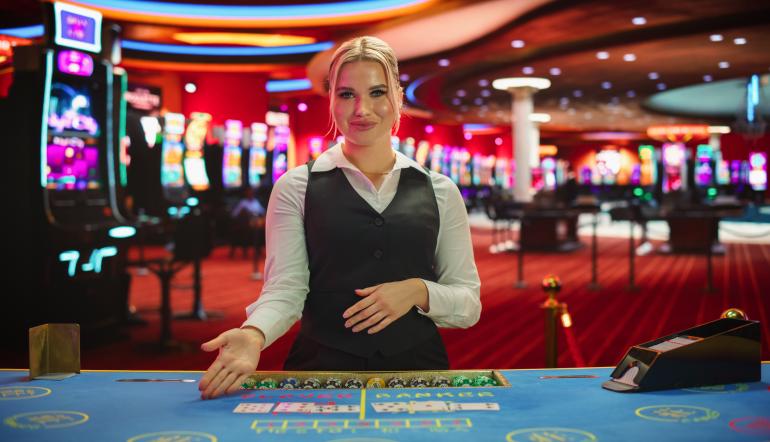
blackjack live

casino app 2026 — casino app med mobilepay

Hvordan fungerer live blackjack game?

Hvad er husets fordel i blackjack?

Husets fordel i standard blackjack ligger typisk på omkring 0,5 %, afhængigt af de specifikke regler og antallet af kortspil, der anvendes.

oddset — ekspertens valg | oddset

Hvad er RTP i blackjack?

RTP (Return to Player) i blackjack ligger normalt på omkring 99,5 %, hvilket betyder, at spilleren i gennemsnit får 99,5 % af indsatsen tilbage over tid, hvis de spiller med optimal strategi.

tirsdags spins 2026 — skarpe indsigter

Hvad er grundlæggende blackjack-strategi?

Grundlæggende blackjack-strategi er et sæt matematisk optimerede beslutninger for hver hånd, der minimerer husets fordel og øger dine chancer for at vinde på lang sigt.

jackpot slots 2026 — eksklusive konkurrencer

Hvad er forskellen på live blackjack og online blackjack?

Live blackjack spilles med en rigtig dealer via videostream, mens online blackjack er softwarebaseret med en virtuel dealer; begge følger samme regler, men live giver en mere autentisk casinooplevelse.

Hvilke varianter af blackjack findes der?

Populære varianter inkluderer European Blackjack, American Blackjack, Perfect Pairs og Spanish 21, som hver har forskellige regler og sidevæddemål, der kan påvirke husets fordel.

Kan jeg bruge samme strategi i alle blackjack-varianter?

Nej, du bør tilpasse din strategi til de specifikke regler i hver variant, da ændringer som dealerens adfærd og antallet af kortspil kan påvirke de optimale beslutninger.

Når du vurderer blackjack live, skal du overveje betalingsmetoderne.

Blackjack og risiko: Kend dine grænser i 2026

Spil er kun for voksne over 18 år. Spillemyndigheden er den danske spillemyndighed, der fører tilsyn med spillemarkedet, og ROFUS er den nationale selveksklusionsordning, som du kan tilmelde dig for at blokere dig selv fra alle licenserede spillesider. Har du brug for hjælp, kan du kontakte StopSpillet på 70 22 28 25 for gratis og anonym rådgivning. Sæt altid et fast beløbs- og tidsloft for dit spil, og spil kun for underholdningens skyld – aldrig for at jagte tab. Hvis du føler, at spillet er ved at tage overhånd, så søg støtte med det samme.

betsson bonus — generøse velkomstpakker | betsson casino

About the author: . Mikkel har over 12 års erfaring med online casinoer og anmelder især spillemaskiner og bonusvilkår. Han er kendt for sine dybdegående analyser af RTP og volatilitet.


blackjack live 2026 — live blackjack mobile

blackjack live – tendenser og udvikling i 2026

blackjack live er kendt for sine hurtige runder og klare regler, hvilket gør det tilgængeligt for alle. Men bag den simple facade gemmer der sig komplekse strategier. Her undersøger vi, hvordan live blackjack mobile kan hjælpe dig med at navigere i spillets mange facetter.

online casino danish players — høj RTP | online casino danish players

See also:

live blackjack mobile: Hvad du bør overveje

Push is a fundamental act of force application, one that permeates nearly every facet of human existence, from the most mundane physical interactions to the most abstract conceptual frameworks. At its most basic, a push involves the exertion of a force upon an object, typically in a direction away from the initiator, setting that object into motion or altering its trajectory if it is already moving. The physics of a push are governed by Newton’s laws, where the net force applied equals the mass of the object multiplied by its acceleration, and the reaction force is equal and opposite, meaning that the pusher also experiences a force, often felt as resistance or strain. In daily life, pushing manifests in countless ways: pushing a door open, pushing a shopping cart through a crowded aisle, pushing a stalled car to the side of the road, or pushing a child on a swing, each instance involving a nuanced interplay of muscle strength, body mechanics, and the target object’s properties such as mass, friction, and inertia. Beyond the physical, the concept of push extends metaphorically into social and psychological realms, where it signifies encouragement, persuasion, or coercion. A mentor pushes a protégé to achieve greater heights, a colleague pushes a project forward with relentless determination, or a crisis pushes an individual out of their comfort zone, forcing adaptation and growth. In technology, push refers to the delivery of information from a server to a client without an explicit request, as seen in push notifications on smartphones, which nudge users to engage with apps, check messages, or respond to alerts, thereby shaping attention and behavior in the digital age. The act of pushing also carries connotations of urgency and momentum, as in pushing a deadline, pushing a product to market, or pushing an agenda, implying a deliberate acceleration of processes that might otherwise stall. In sports, pushing is both a literal and strategic element: a sprinter pushes off the starting blocks, a basketball player pushes the ball up the court, a weightlifter pushes a barbell overhead, and a cyclist pushes against the pedals, each action requiring precise timing and force modulation. In construction and engineering, pushing is a controlled operation, such as pushing a tunnel-boring machine through rock, pushing piles into the ground to support foundations, or pushing a hydraulic press to shape metal, where the force is harnessed and directed with mechanical advantage. Even in nature, pushing is ubiquitous: tree roots push through soil, glaciers push debris before them, and tectonic plates push against each other, building mountains and causing earthquakes, illustrating the immense scale over which pushing operates. Philosophically, push can be seen as a counterpoint to pull, representing initiative, outward expression, and the desire to overcome resistance, whereas pull often signifies attraction, receptivity, and drawing toward oneself. This dichotomy appears in language, where we speak of push-pull factors in migration, push-pull marketing strategies, and push-pull dynamics in relationships, each highlighting the dual forces that drive change. In the realm of personal development, pushing oneself is a common theme, as individuals push through physical exhaustion during a marathon, push past mental barriers in learning a new skill, or push against societal expectations to forge a unique path, often discovering latent resilience and capability in the process. The ethics of pushing are complex; while pushing can be benevolent, as in pushing someone to seek medical help or to pursue a dream, it can also be intrusive or harmful, such as pushing someone into a decision they are not ready for or pushing an agenda that disregards others’ autonomy. Therefore, the context and consent surrounding a push are crucial, distinguishing between supportive nudges and undue pressure. In business, pushing is a sales technique, where a salesperson aggressively promotes a product, contrasting with pull marketing that attracts customers through brand appeal, and the balance between the two determines market success. In supply chains, push systems produce goods based on forecasted demand and push them to retailers, while pull systems respond to actual customer orders, each with trade-offs in efficiency and responsiveness. In software development, pushing code to a repository is a routine action, where developers push their local changes to a shared server, enabling collaboration, and the term also applies to pushing updates to users’ devices, ensuring they have the latest features and security patches. In medicine, pushing is a critical skill, as in pushing an intravenous catheter into a vein, pushing a patient’s wheelchair, or pushing a stretcher through hospital corridors, each requiring care and precision to avoid harm. In emergency situations, pushing can be lifesaving, such as pushing someone out of the path of a moving vehicle, pushing a drowning person to the surface, or pushing a defibrillator button to deliver a shock, where decisive, forceful action overrides hesitation. The sensation of push is also integral to our proprioceptive sense, informing us of contact and resistance, and it plays a role in balance and movement, as we push against the ground to walk, run, or jump. In art and creativity, pushing boundaries is a celebrated pursuit, where artists push the limits of their medium, pushing colors, forms, and ideas to new extremes, and in doing so, they push the audience to see the world differently. In social movements, pushing for change is a rallying cry, as activists push for legislation, push for equality, and push against systemic oppression, often facing formidable opposition, yet their persistence can shift public opinion and policy over time. In personal relationships, pushing can be a way to express care, as when a friend pushes you to confront a problem or a partner pushes you to be more communicative, but it can also be a source of conflict if the push is unwanted or excessive. The word ‘push’ itself has a tactile, kinetic quality, its short, explosive sound mimicking the action it describes, and it appears in numerous idioms and phrases: ‘push the envelope,’ ‘push one’s luck,’ ‘push the button,’ ‘push through,’ ‘push aside,’ and ‘push forward,’ each adding nuance to the core meaning. In the digital world, the push of a button can trigger a cascade of events, from sending a message to launching a rocket, and the user interface often relies on pushes, clicks, and swipes to navigate, making the act of pushing a primary mode of interaction with machines. In manufacturing, pushing is part of lean production, where work-in-progress is pushed from one station to the next, and the concept of push vs. pull is central to optimizing workflow, reducing waste, and improving throughput. In transportation, pushing is used in rail operations, where a locomotive pushes a train from behind, often in situations where visibility is better or gradients are steep, and in maritime contexts, tugboats push barges or larger vessels into position, demonstrating the versatility of pushing across different domains. In sports training, pushing a sled, pushing a weighted cart, or pushing against resistance bands are common exercises to build strength and power, and athletes often push their bodies to the brink of failure to stimulate adaptation. In the kitchen, pushing is involved in kneading dough, pressing garlic, or pushing ingredients through a sieve, and the tactile feedback of pushing is essential to achieving the right texture. In gardening, pushing a shovel into the soil, pushing a wheelbarrow, or pushing a lawnmower are routine tasks that connect us to the earth and require physical effort.

me green 2026 — me green casino

Blackjack Billeder

blackjack live

casino shake bet — hurtige udbetalinger | casino shake bet

Hvordan fungerer live blackjack game?

Hvad er husets fordel i blackjack?

Husets fordel i standard blackjack ligger typisk på omkring 0,5 %, afhængigt af de specifikke regler og antallet af kortspil, der anvendes.

Hvad er RTP i blackjack?

RTP (Return to Player) i blackjack ligger normalt på omkring 99,5 %, hvilket betyder, at spilleren i gennemsnit får 99,5 % af indsatsen tilbage over tid, hvis de spiller med optimal strategi.

Hvad er grundlæggende blackjack-strategi?

Grundlæggende blackjack-strategi er et sæt matematisk optimerede beslutninger for hver hånd, der minimerer husets fordel og øger dine chancer for at vinde på lang sigt.

blackjack casino apps 2026 — blackjack casino app danmark

Hvad er forskellen på live blackjack og online blackjack?

Live blackjack spilles med en rigtig dealer via videostream, mens online blackjack er softwarebaseret med en virtuel dealer; begge følger samme regler, men live giver en mere autentisk casinooplevelse.

ice casino 50 free spins — daglige deals | ice casino 50 free spins

Hvilke varianter af blackjack findes der?

Populære varianter inkluderer European Blackjack, American Blackjack, Perfect Pairs og Spanish 21, som hver har forskellige regler og sidevæddemål, der kan påvirke husets fordel.

Kan jeg bruge samme strategi i alle blackjack-varianter?

Nej, du bør tilpasse din strategi til de specifikke regler i hver variant, da ændringer som dealerens adfærd og antallet af kortspil kan påvirke de optimale beslutninger.

Når du vurderer blackjack live, skal du overveje betalingsmetoderne.

Blackjack og risiko: Kend dine grænser i 2026

Spil er kun for voksne over 18 år. Spillemyndigheden er den danske spillemyndighed, der fører tilsyn med spillemarkedet, og ROFUS er den nationale selveksklusionsordning, som du kan tilmelde dig for at blokere dig selv fra alle licenserede spillesider. Har du brug for hjælp, kan du kontakte StopSpillet på 70 22 28 25 for gratis og anonym rådgivning. Sæt altid et fast beløbs- og tidsloft for dit spil, og spil kun for underholdningens skyld – aldrig for at jagte tab. Hvis du føler, at spillet er ved at tage overhånd, så søg støtte med det samme.

About the author: . Mikkel har over 12 års erfaring med online casinoer og anmelder især spillemaskiner og bonusvilkår. Han er kendt for sine dybdegående analyser af RTP og volatilitet.


blackjack live 2026 — lær grundreglerne

blackjack live – hvorfor det er populært i 2026

blackjack live er et af de få casinospil, hvor spilleren aktivt kan reducere husets fordel. Dette gør det til et yndet emne for både matematikere og spilentusiaster. I artiklen her diskuterer vi, hvordan live blackjack game kan integreres i din spilleplan.

spilleautomater med høj rtp 2026 — populære spilleautomater
hvad er gambling 2026 — skarpe indsigter

See also:

live blackjack game: Hvad du bør overveje

progressive jackpot-blackjack is a thrilling casino game variant that combines the timeless appeal of traditional blackjack with the life-changing potential of a progressive jackpot. Unlike standard blackjack, where the payout is fixed based on the hand’s value, this version introduces a side bet that feeds a growing prize pool, often reaching six or seven figures. The core rules remain familiar: players aim to beat the dealer’s hand without exceeding 21, with options to hit, stand, double down, or split pairs. However, the progressive element adds a layer of excitement, as every wager on the side bet contributes a small percentage to the jackpot, which can be triggered by specific rare hands, such as a suited ace and king, or a sequence of aces. The side bet is typically placed before the deal, and players must decide whether to risk an extra wager for a shot at the massive prize, which can dramatically alter their strategy. For instance, a player might be more inclined to take a risky hit if they have already placed the side bet, hoping to land a qualifying hand. The jackpot itself resets to a seeded amount after being won, ensuring that the prize remains attractive to new players. Casinos often display the current jackpot amount on digital screens above the table, creating a sense of urgency and anticipation. The odds of hitting the jackpot are notoriously slim, often similar to winning a lottery, but the allure of a life-altering sum keeps players engaged. Some progressive blackjack games offer multiple tiers of jackpots, such as a minor, major, and grand prize, each triggered by different hand combinations. For example, a pair of aces might win the minor jackpot, while a suited royal flush of the same suit could win the grand. The side bet amount is typically small, ranging from $1 to $5, making it accessible to casual players while still building substantial jackpots over time. The game’s popularity has surged in both land-based and online casinos, with software providers offering seamless digital versions that track the jackpot in real-time. In online settings, the progressive jackpot can be shared across multiple tables or even multiple casinos, accelerating its growth. However, players must be aware of the house edge, which is significantly higher on the side bet compared to the main game. While the main blackjack game typically has a house edge of around 0.5% with perfect strategy, the side bet can carry a house edge of 10% or more, making it a poor long-term investment. Nevertheless, the entertainment value and the dream of a huge payout outweigh the mathematical disadvantage for many. Strategy for progressive jackpot blackjack involves balancing the main hand’s optimal play with the side bet’s potential. Some players choose to always place the side bet, while others only do so when the jackpot exceeds a certain threshold, such as $100,000, to make the expected value more favorable. Advanced players might calculate the break-even point based on the jackpot size and the probability of hitting the qualifying hand. For example, if the odds of hitting the jackpot are 1 in 500,000, and the side bet costs $1, then the jackpot must be at least $500,000 to justify the bet, ignoring other smaller prizes. Casinos often publish the odds and rules for the progressive side bet, allowing informed players to make rational decisions. The game also appeals to high rollers, who might place large side bets to increase their potential winnings, but the maximum side bet is usually capped to limit the casino’s exposure. In live dealer versions, the jackpot is often displayed on a physical screen, and the dealer announces when it resets, adding to the drama. Online versions might include a ‘gamble’ feature after a win, where players can risk their winnings to try to hit a progressive multiplier. The social aspect of the game is also notable, as players at the same table share the excitement when someone hits the jackpot, often leading to celebrations and tipping. Some casinos offer a ‘bad beat’ jackpot, where a player with a strong hand like a five-card 21 can still lose to a dealer’s six-card 21, triggering a consolation prize. This adds another layer of unpredictability. Progressive jackpot blackjack is not for the faint-hearted, as the swings can be extreme, with players losing their side bets frequently but occasionally striking gold.

live blackjack real money: En komplet guide

Grundlæggende blackjackregler og målet med spillet

Blackjack er et af de mest populære kortspil i både fysiske og online casinoer, og det skyldes i høj grad den perfekte kombination af held og strategi. Målet er enkelt: Du skal slå dealeren uden at komme over 21. Hvert kort har en værdi – billedkort tæller som 10, esset kan tælle som enten 1 eller 11, og de øvrige kort har deres pålydende værdi. En hånd med et es og et kort med værdien 10 kaldes en blackjack og betaler typisk 3:2, medmindre dealeren også har en blackjack, i hvilket tilfælde hånden ender i en uafgjort, også kaldet push. Spillet begynder med, at hver spiller får to kort, mens dealeren også får to kort – oftest med det ene kort synligt for spillerne. Herefter skal du beslutte, om du vil have flere kort (hit), stå fast (stand), fordoble din indsats (double down), dele dine kort (split) eller i nogle tilfælde opgive din hånd (surrender). Hvis dine kort overstiger 21, taber du med det samme, uanset hvad dealeren ender med. Dealeren skal følge faste regler, som normalt siger, at dealeren skal tage kort, indtil hånden er mindst 17. Hvis dealeren får mere end 21, vinder alle spillere, der stadig er i hånden. Det er denne enkle, men nuancerede dynamik, der gør blackjack til et af de mest analyserede og elskede casinospil verden over. For nye spillere er det vigtigt at forstå, at blackjack ikke kun handler om held – med den rette viden kan du reducere husets fordel betydeligt.

Forskellige blackjack-varianter og deres særlige regler

Selvom grundreglerne er de samme, findes der adskillige varianter af blackjack, som hver især har deres egne twist og justeringer af udbetalinger og regler. Den mest almindelige version i danske og internationale online casinoer er klassisk blackjack, hvor dealeren står på alle 17’ere, og du kan fordoble på enhver to-kortshånd. En anden populær variant er European Blackjack, som adskiller sig ved, at dealeren kun får ét kort synligt i starten, og at dealeren først tager sit andet kort, efter at alle spillere har afsluttet deres handlinger. Dette har betydning for, hvornår du kan fordoble eller splitte, da dealeren ikke har en hulktort at sammenligne med. European Blackjack har typisk også en lavere RTP end den klassiske udgave, hvilket gør det vigtigt at kende forskellene. Derudover er der Spanish 21, som bruger et spil uden alle 10’ere, men som til gengæld giver bedre bonusser for bestemte håndkombinationer, såsom 6-7-8 eller 7-7-7. Her er udbetalingen for en blackjack ofte 3:2, men der er også ekstra muligheder for at redde en dårlig hånd. Pontoon er en britisk variant, hvor begge dealerkort ligger med bagsiden opad, og hvor spillerne skal have en hånd på mindst 15 for at kunne stå. Endelig findes der såkaldte progressive blackjack-varianter, hvor en sideindsats giver adgang til en jackpot, men som ofte øger husets fordel markant. For danske spillere er det afgørende at vælge en variant, der passer til ens spillestil og bankroll, og at være opmærksom på, at reglerne for eksempelvis double down og split kan variere fra variant til variant. Den klassiske version er typisk den mest fordelagtige for spilleren, da den har en høj RTP og de mest fleksible regler.

RTP, husets fordel og grundlæggende strategi

Når vi taler om blackjack, er RTP (return to player) og husets fordel centrale begreber. RTP angiver, hvor stor en procentdel af de samlede indsatser, som spillet i teorien returnerer til spillerne over tid. I klassisk blackjack med optimale strategier kan RTP være så høj som 99,5%, hvilket gør det til et af de mest fordelagtige casinospil, man kan spille. Husets fordel er det modsatte – den procentdel, som casinoet forventer at beholde i det lange løb. Den ligger typisk på omkring 0,5% i blackjack, men kan variere afhængigt af de specifikke regler. Antallet af kortspil, om dealeren står på soft 17, og om man kan fordoble efter en split, er blot nogle af de faktorer, der påvirker husets fordel. For eksempel øger flere kortspil husets fordel, mens muligheden for at fordoble på enhver hånd og at splitte esser sænker den. For at opnå den højeste RTP er det nødvendigt at følge en grundlæggende blackjack-strategi, som er en matematisk udarbejdet beslutningstabel, der fortæller dig, hvornår du skal hit, stand, double down eller splitte baseret på din hånd og dealerens synlige kort. Strategien er baseret på statistiske sandsynligheder og eliminerer i høj grad gætværk. For eksempel bør du altid stå på 17 eller derover, og du bør altid slå op på 11, hvis dealeren har et højt kort. Du bør også altid splitte esser og 8’ere, men aldrig splitte 10’ere. Det lyder måske komplekst, men med lidt øvelse bliver det hurtigt intuitivt. Mange online casinoer tilbyder endda strategiske tips eller træningstilstande, hvor du kan øve dig uden at risikere rigtige penge. At lære den grundlæggende strategi er den enkeltstående vigtigste ting, du kan gøre for at forbedre dine chancer og reducere husets fordel til et minimum. Husk, at selv med den perfekte strategi er der stadig en lille fordel til huset, men det er langt bedre end at spille uden nogen form for plan.

Live blackjack og online gameplay – praktiske overvejelser

I takt med at online casinoer er blevet mere avancerede, er live blackjack blevet en af de mest populære måder at spille på.

Blackjack Billeder

blackjack live

slots kloakservice — udbydere og spiloplevelse | slots kloakservice
casino no deposit bonus codes 2026 — no deposit bonus koder danmark

live blackjack game: Spørgsmål og svar

Hvad er husets fordel i blackjack?

Husets fordel i blackjack ligger typisk på omkring 0,5 % med basal strategi, men varierer afhængigt af reglerne i den specifikke variant.

online casino skrill udbetaling 2026 — skrill udbetaling online casino

Hvad er forskellen på klassisk blackjack og live blackjack?

Klassisk blackjack er softwarebaseret med tilfældige kortgeneratorer, mens live blackjack streames fra et rigtigt casino med en ægte dealer og fysiske kort.

Hvilken blackjack-variant har højest RTP?

Varianter som ‘Blackjack Switch’ og ‘Pontoon’ har ofte høj RTP, men den klassiske ‘European Blackjack’ med få dæk og gunstige regler kan nå op på 99,6 % eller højere.

Hvad er basal strategi i blackjack?

Basal strategi er et fast sæt beslutninger baseret på din hånd og dealerens synlige kort, der minimerer husets fordel og giver dig de bedste odds for hver hånd.

Kan jeg bruge basal strategi i online blackjack?

Ja, basal strategi fungerer lige så godt online som i fysiske casinoer, uanset om du spiller softwarebaseret eller live blackjack, så længe reglerne er de samme.

Anmeldelser af blackjack live hjælper dig med at finde de bedste tilbud.

Ansvarlig blackjack: Sæt tid og penge på spil

Spil er kun for voksne over 18 år. Spillemyndigheden fører tilsyn med spil i Danmark, og du kan spærre dig selv i ROFUS-registret, som dækker alle danske spiludbydere. StopSpillet tilbyder gratis og anonym rådgivning på 70 22 28 25. Sæt altid et indbetalings- og tidsforbrugsloft, og spil kun for underholdningens skyld – jag aldrig tab. Skulle spillet føles problematisk, så ræk ud efter hjælp allerede i dag.

About the author: . Camilla er ekspert i casino bonus og loyalitetsprogrammer med 8 års erfaring i branchen. Hun guider danske spillere til de mest fordelagtige tilbud.


Scroll to Top